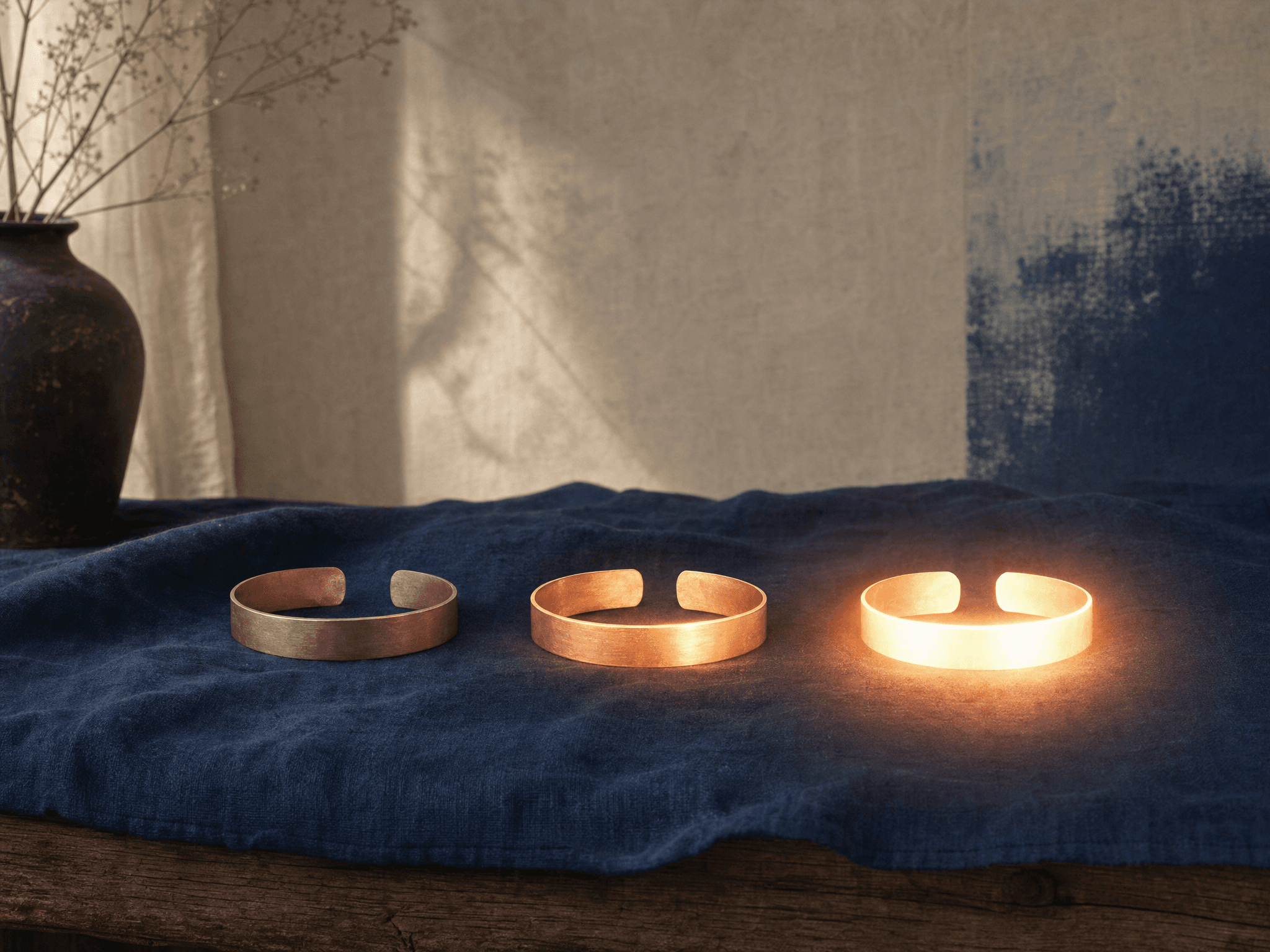
Training is over and the bracelet is sealed; whatever it learned is locked in for good. But at painting time we still hold one very valuable knob: scale, which sets how much our painter trusts the bracelet, how hard they lean on it. Turning it costs nothing, and honestly, this is probably where we'll spend most of our time.
From a light touch to caricature
Here's what happens when we turn the scale knob with the prompt and the seed pinned in place:
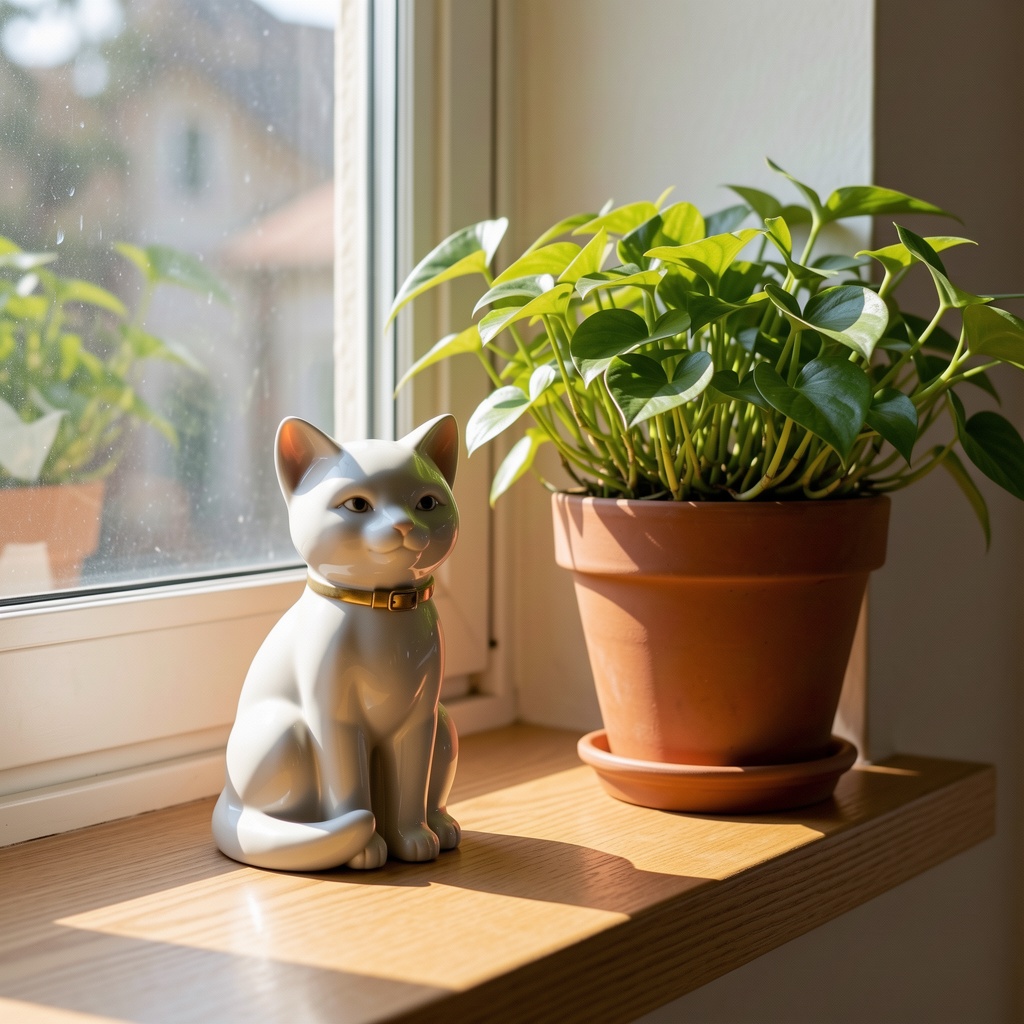
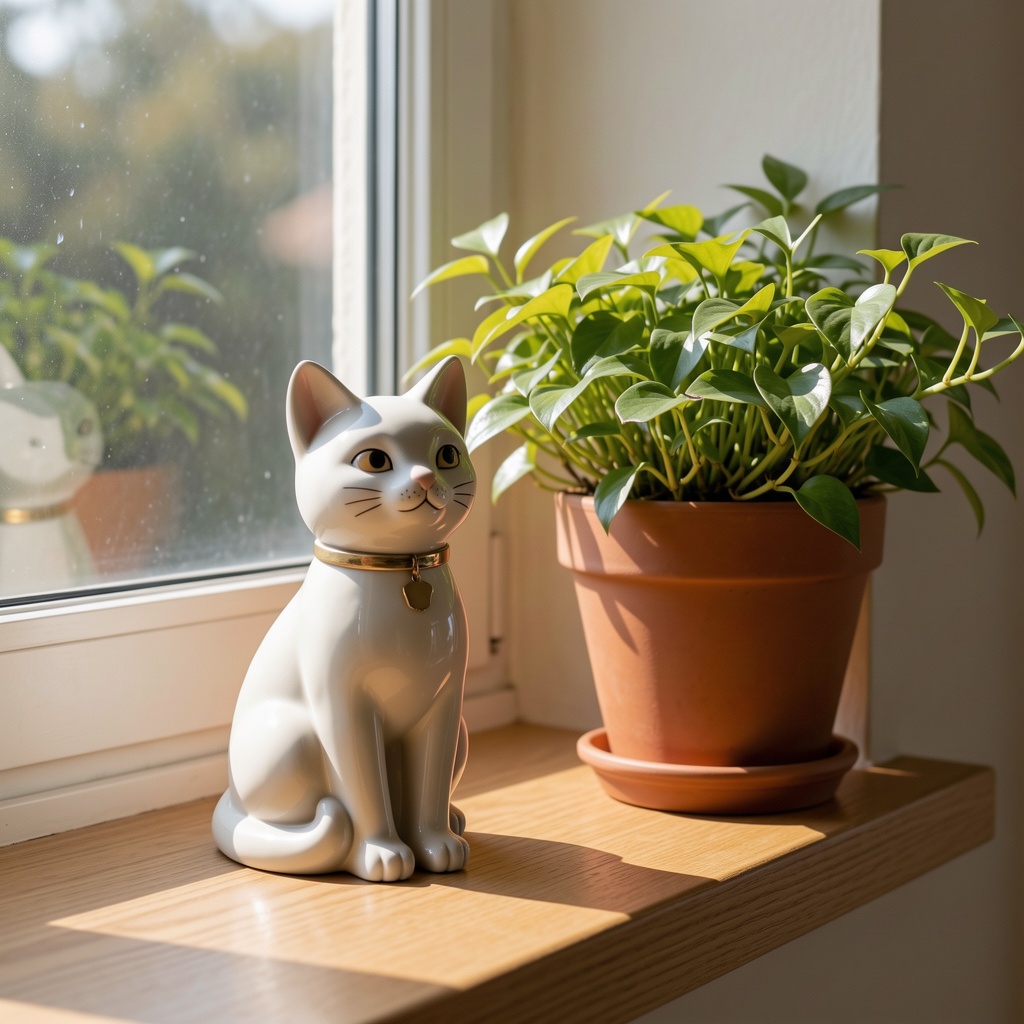
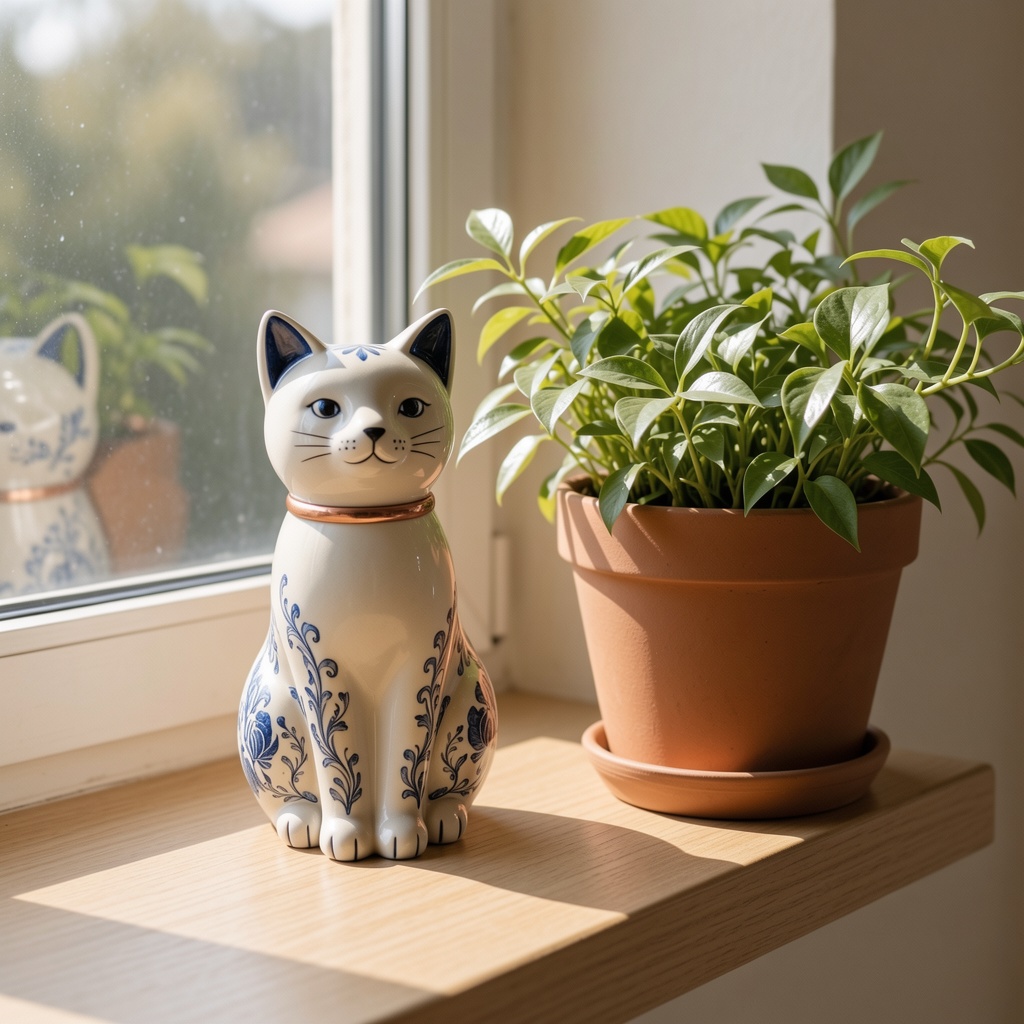
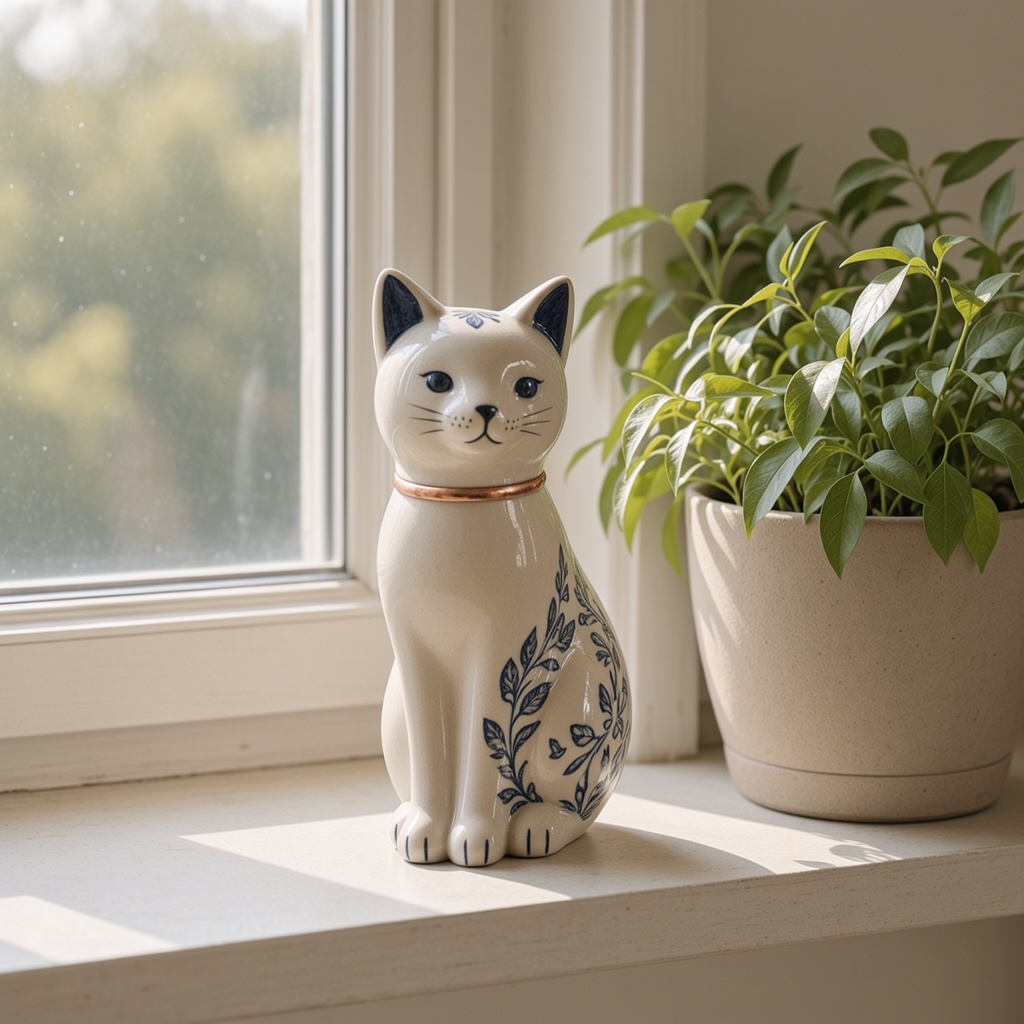
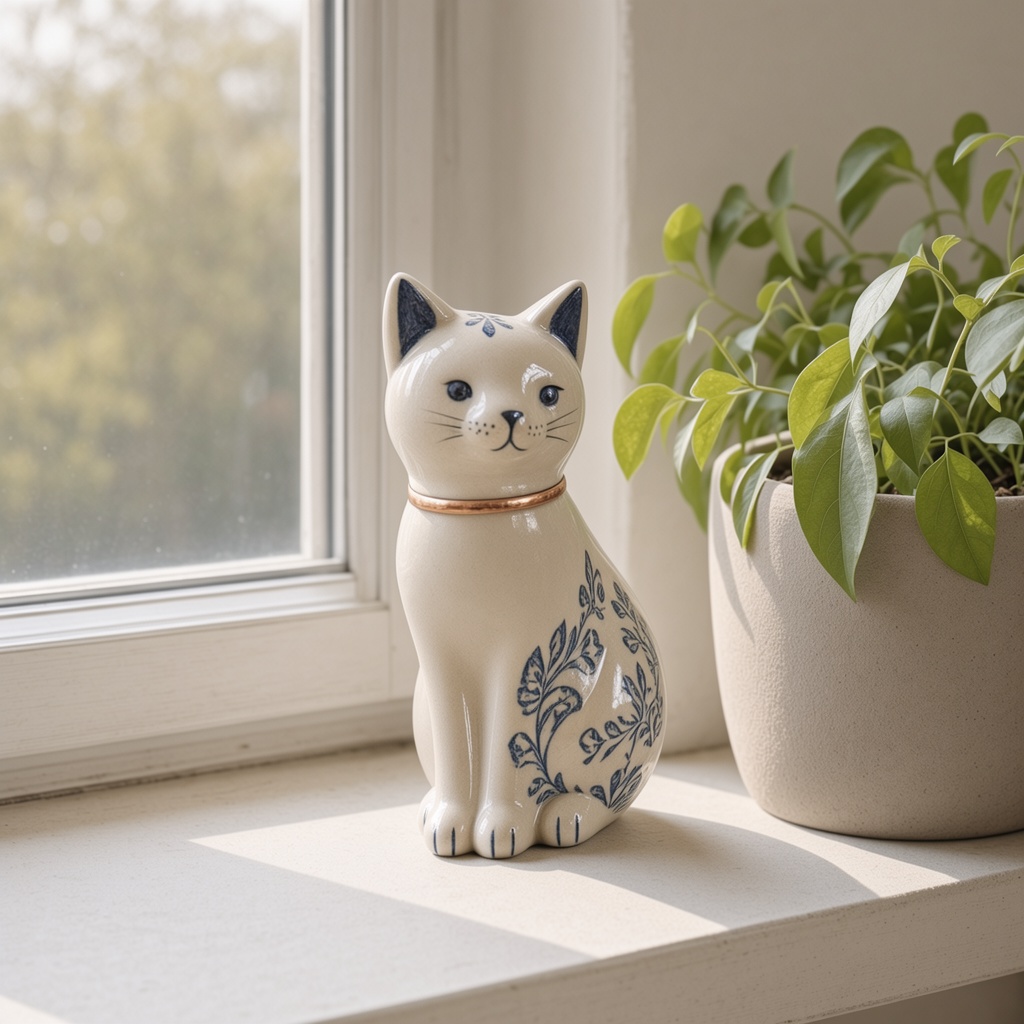
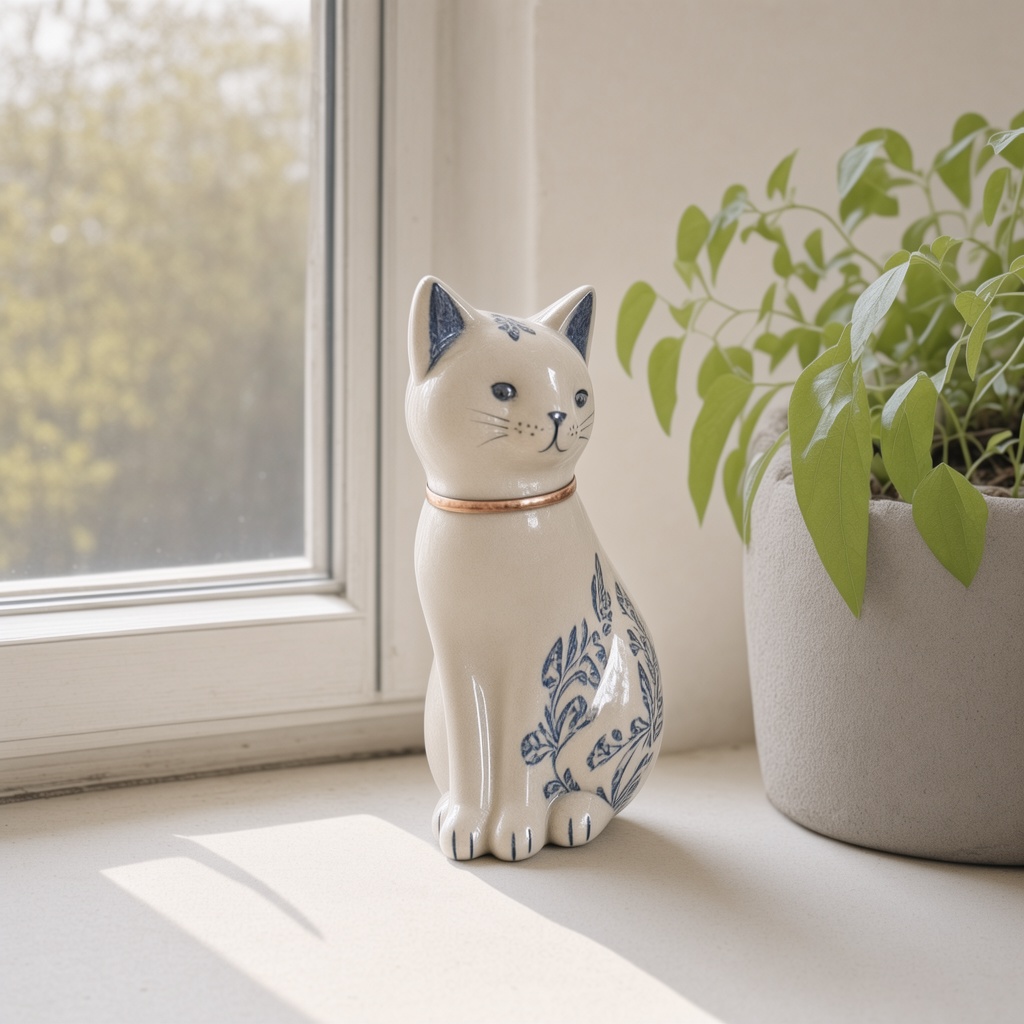
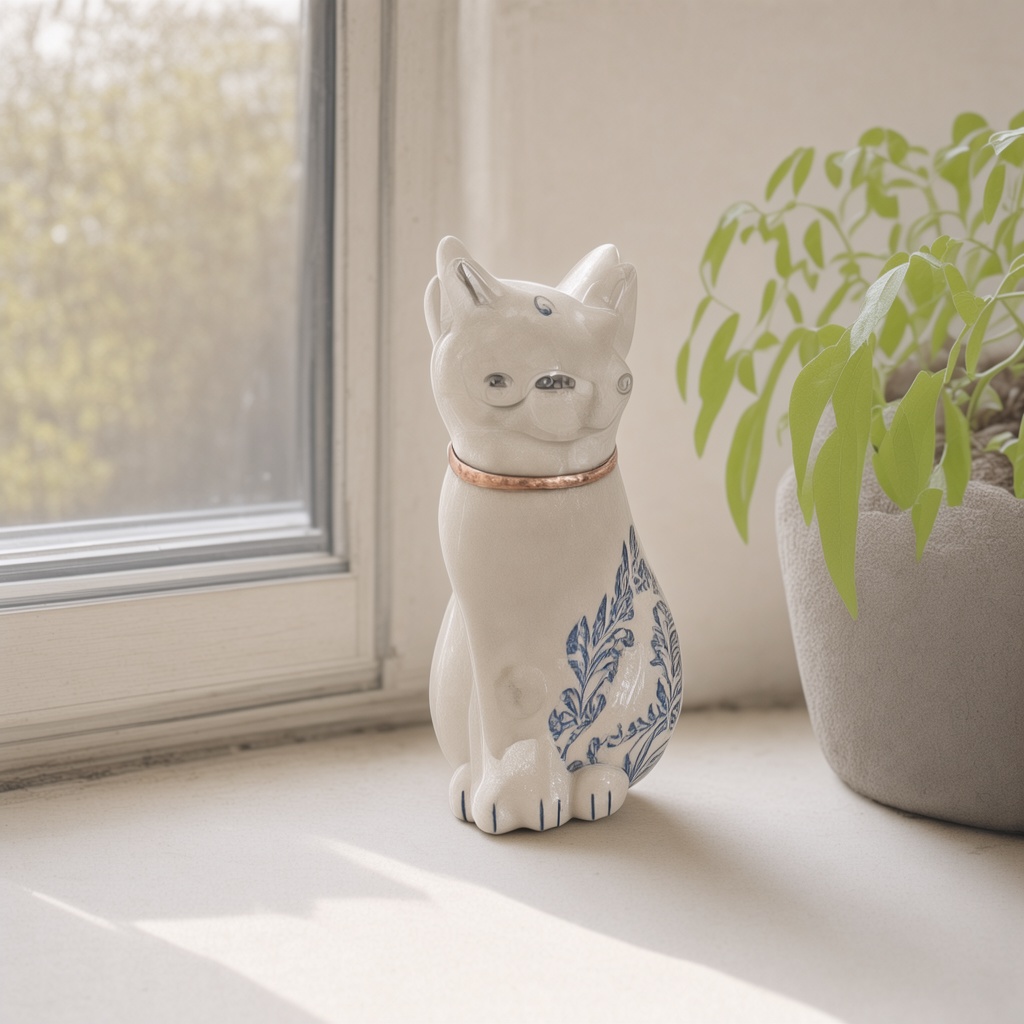
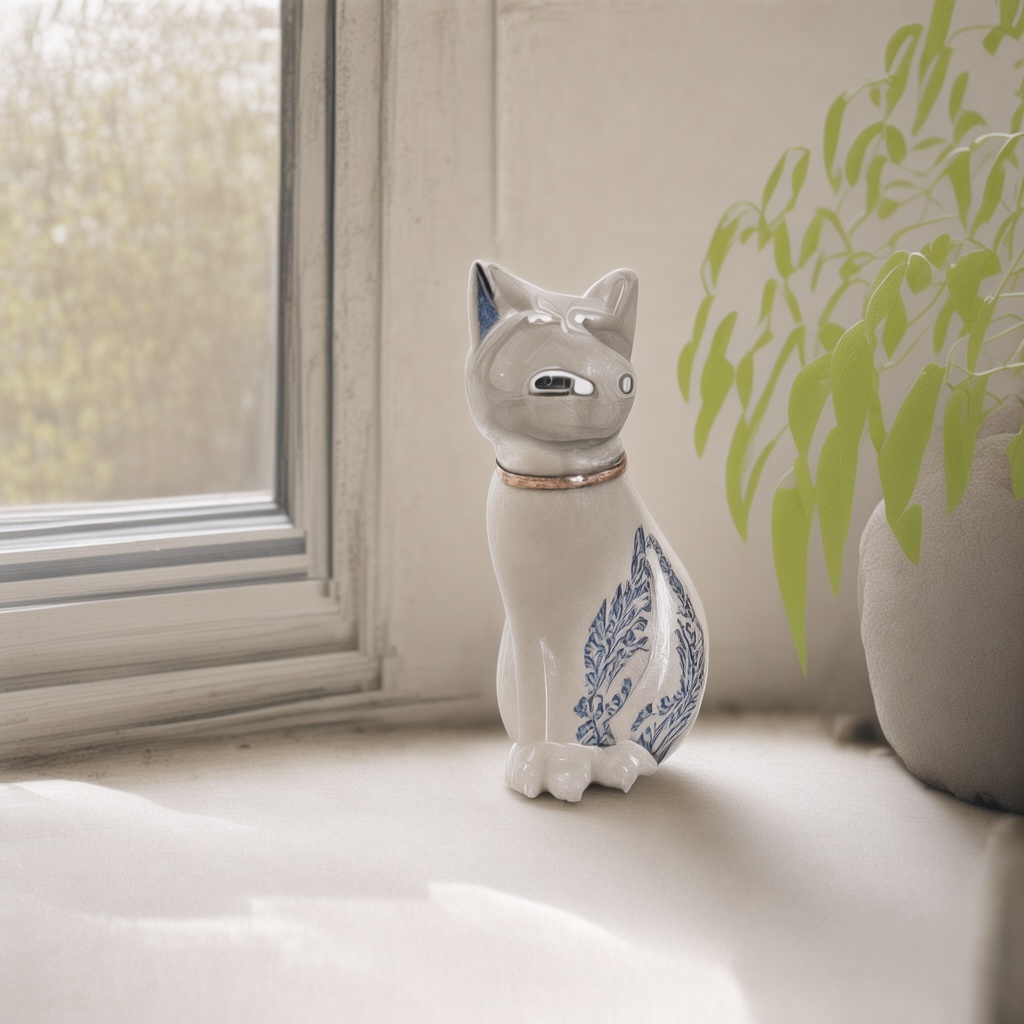
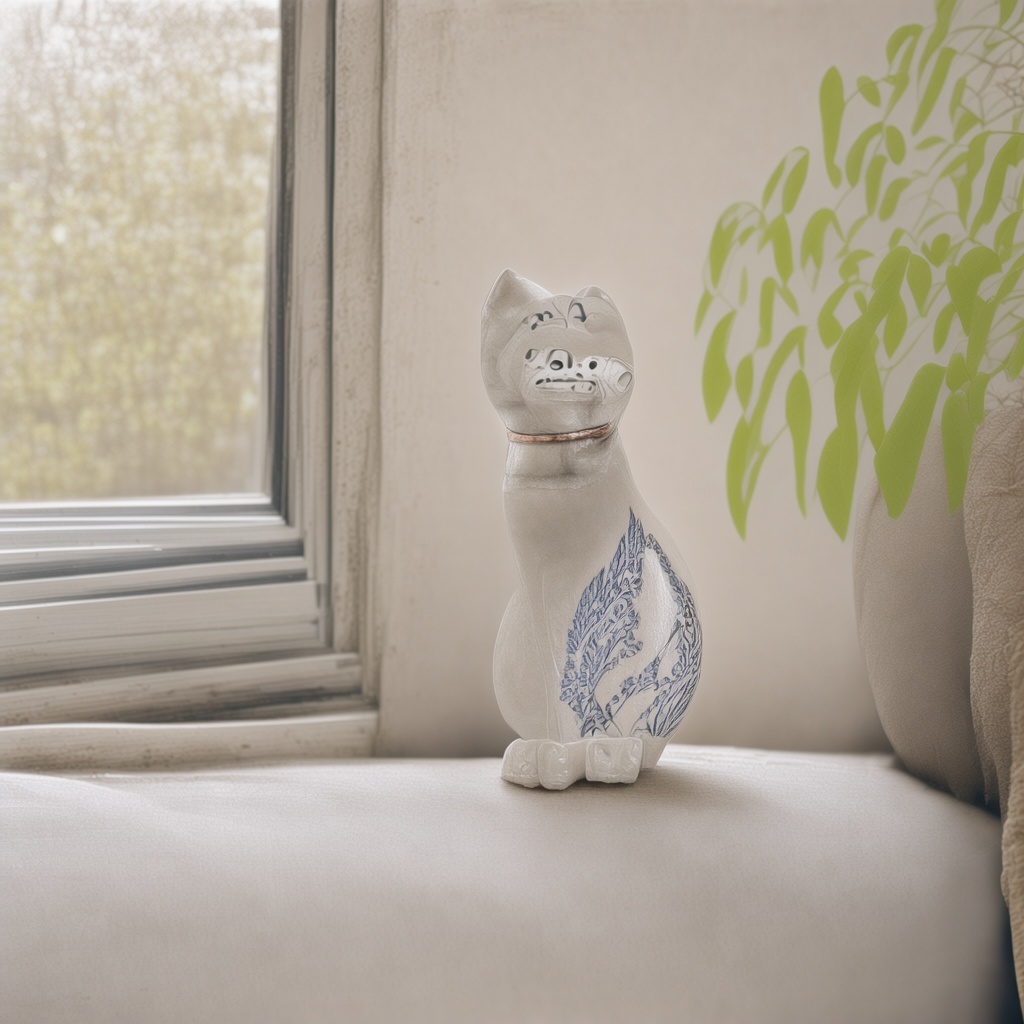 scale: 1.00
The seed and the prompt never change: a photo of TOK ceramic cat figurine sitting on a sunny windowsill beside a potted plant
- 0: bracelet off. The painter draws from the base model's general knowledge alone.
- 0.5: a faint hint. Very handy when we're blending strong styles into each other.
- 1.0: the sweet spot it was trained at. This is our calibration point, and always our first stop.
- 1.5 to 2: emphasis. The identity speaks up, and the whole scene starts arranging itself around the subject.
- 3 and beyond: caricature first, then collapse. We mostly use this range for diagnosis, to see what the LoRA has really learned.
Two bracelets at once
Our painter can wear more than one bracelet at a time, and the skills join hands: the subject bracelet whispers what to paint, the style bracelet whispers how. Let's mix our TOK subject LoRA with the TOKSTYLE gouache style:
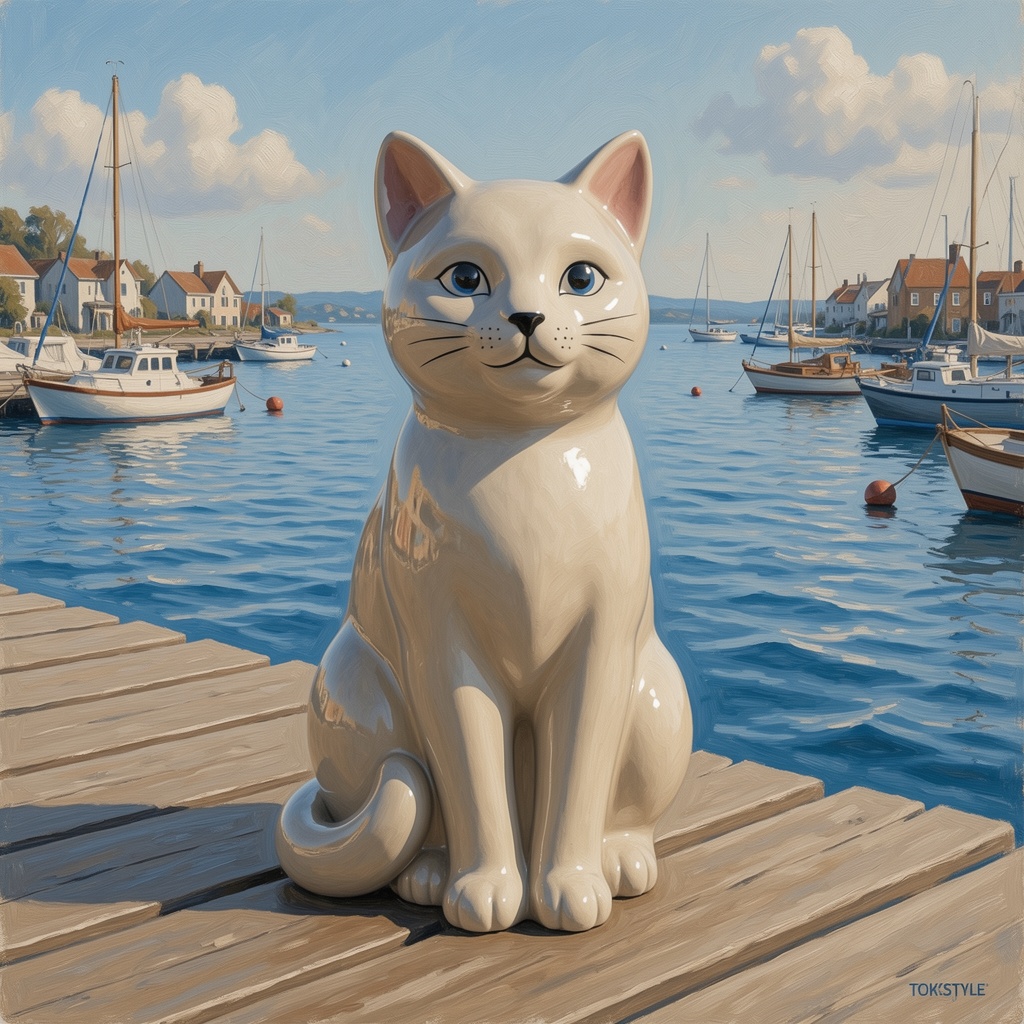
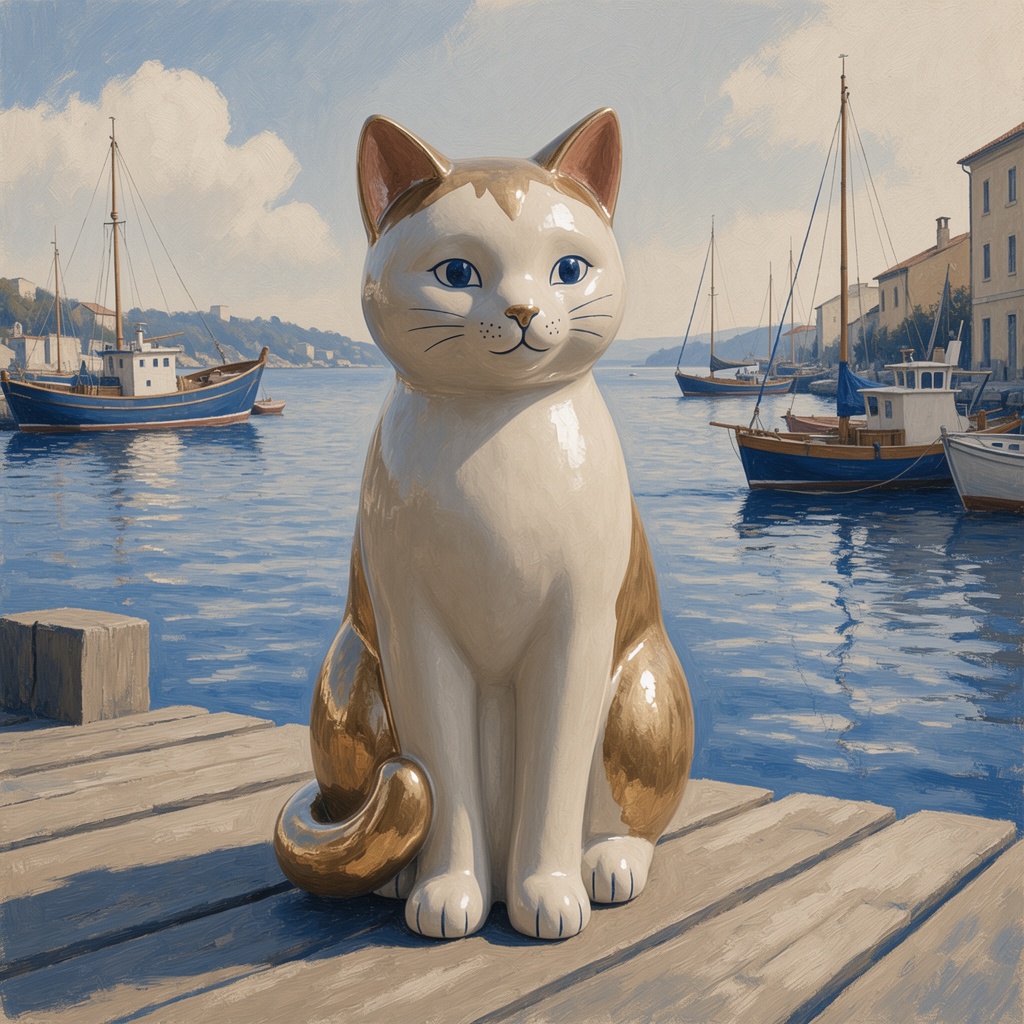
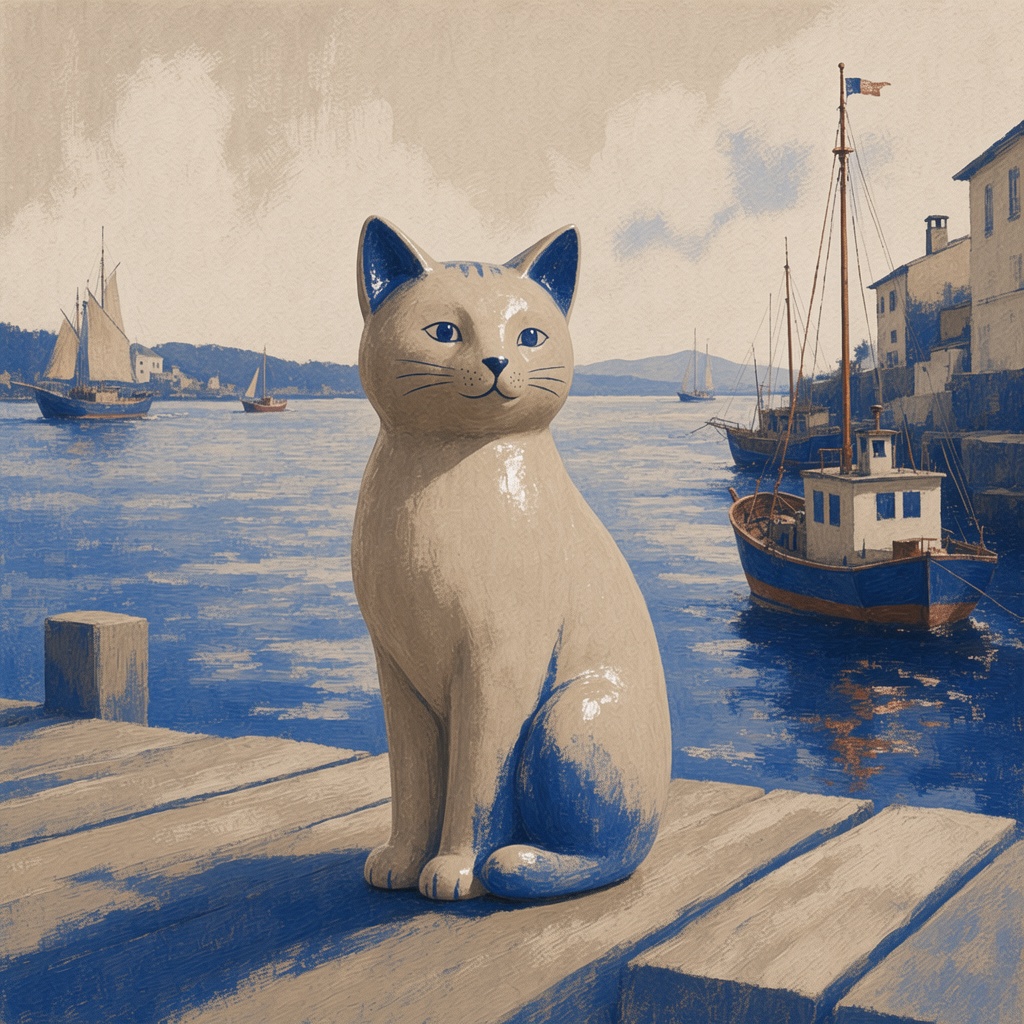
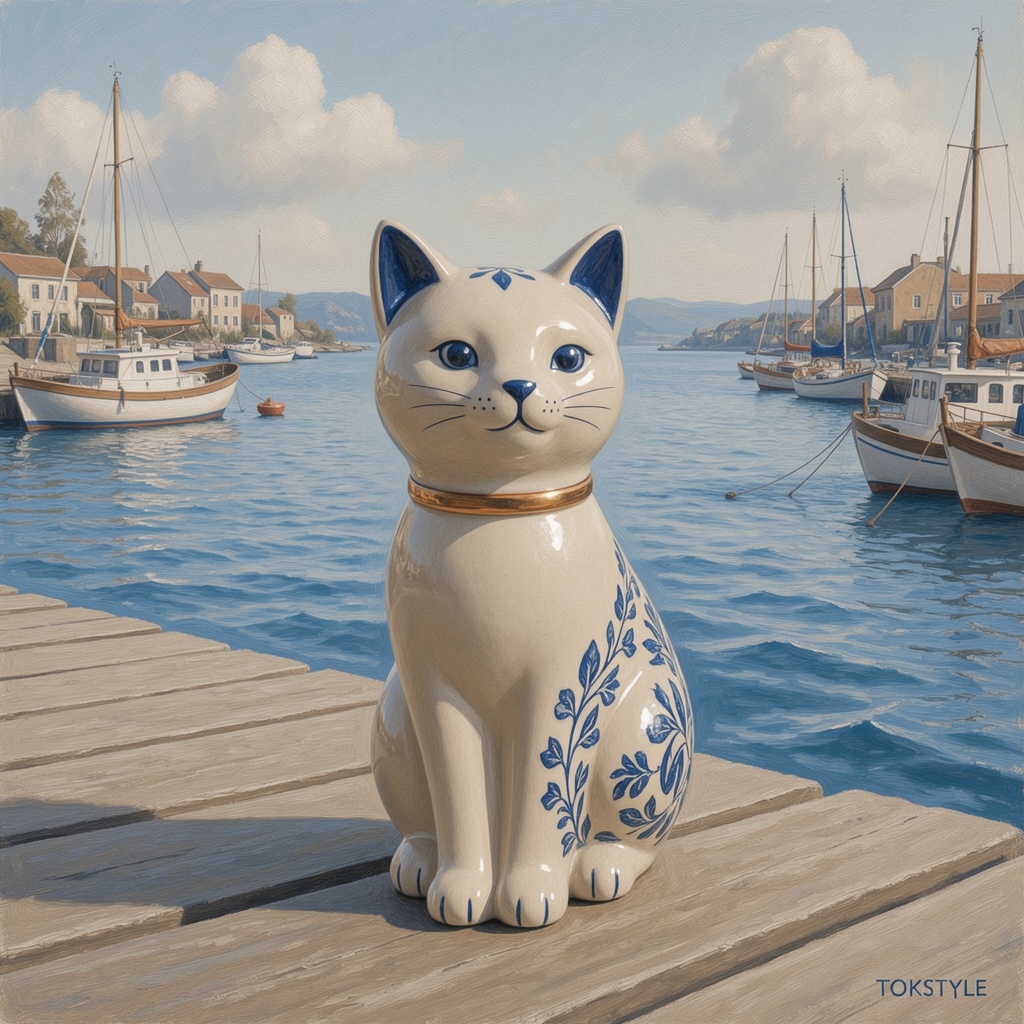
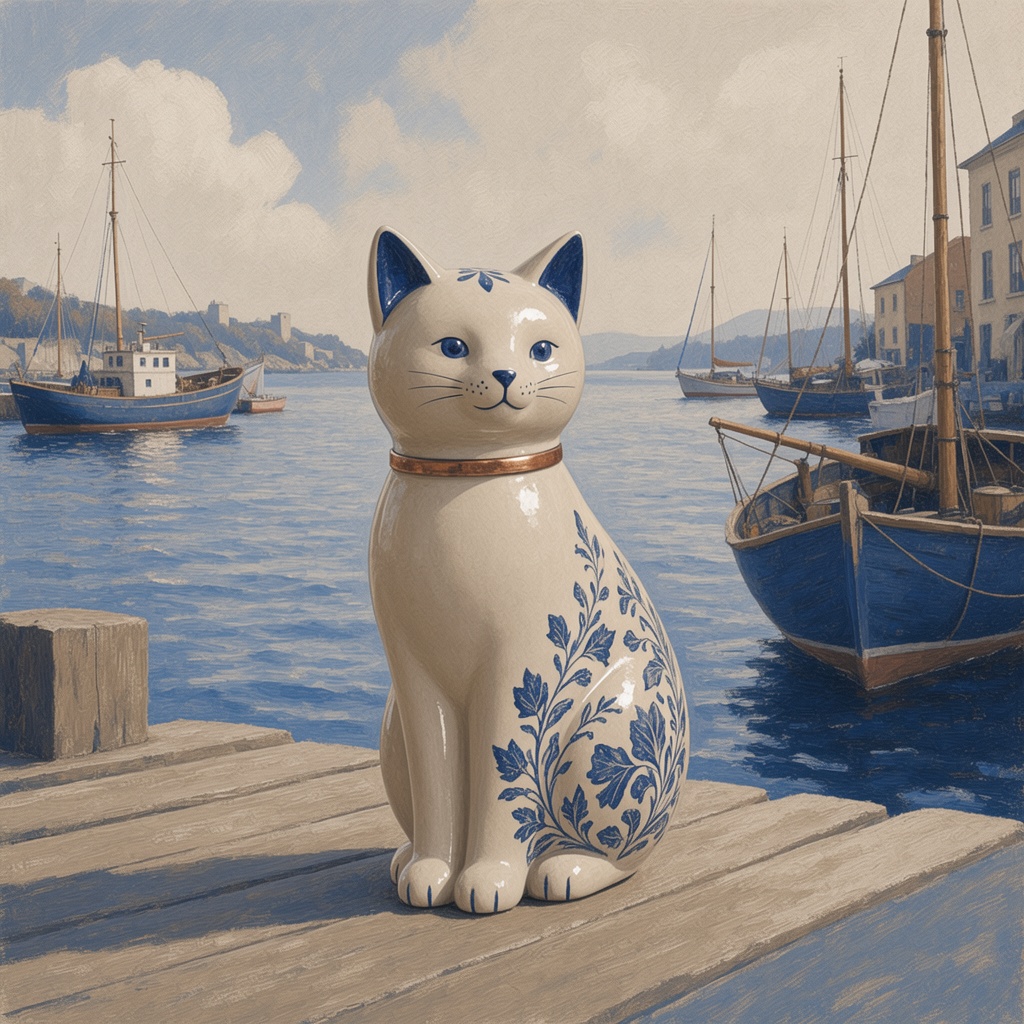
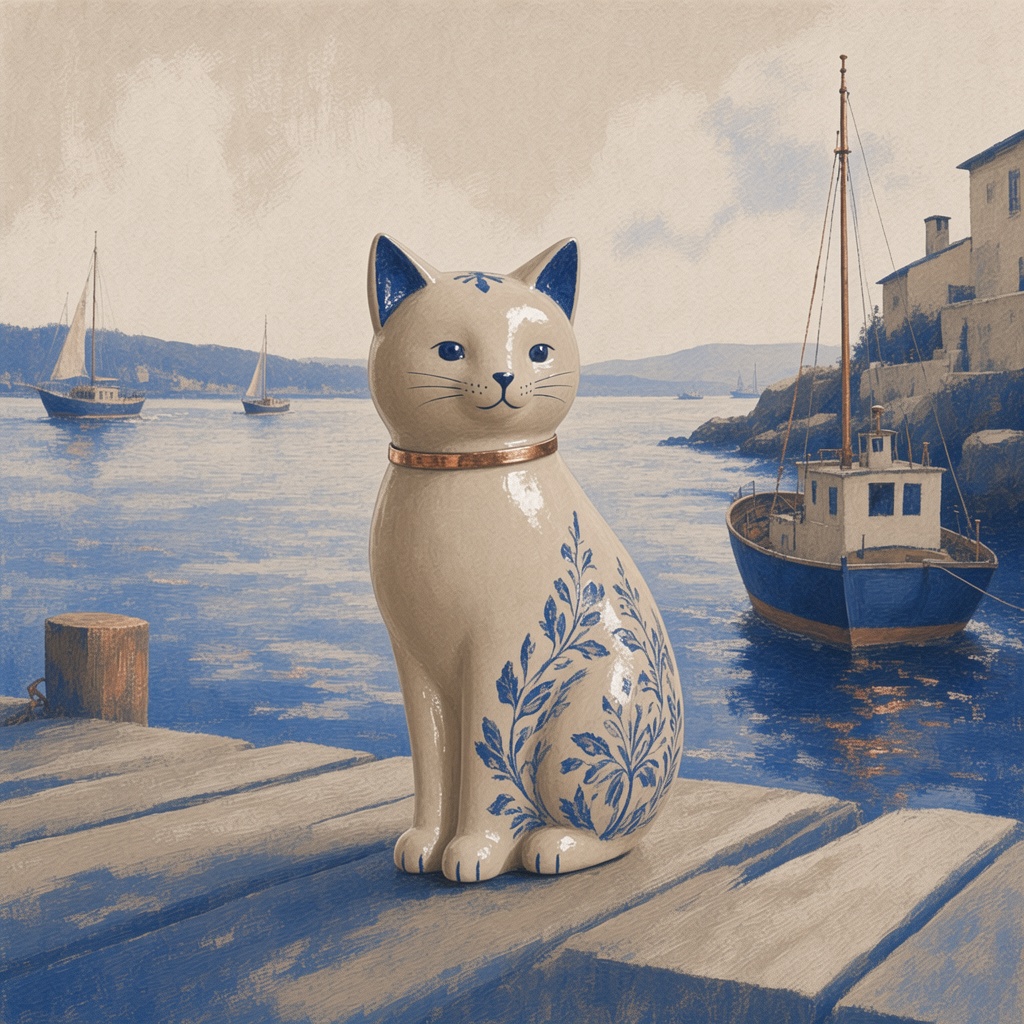
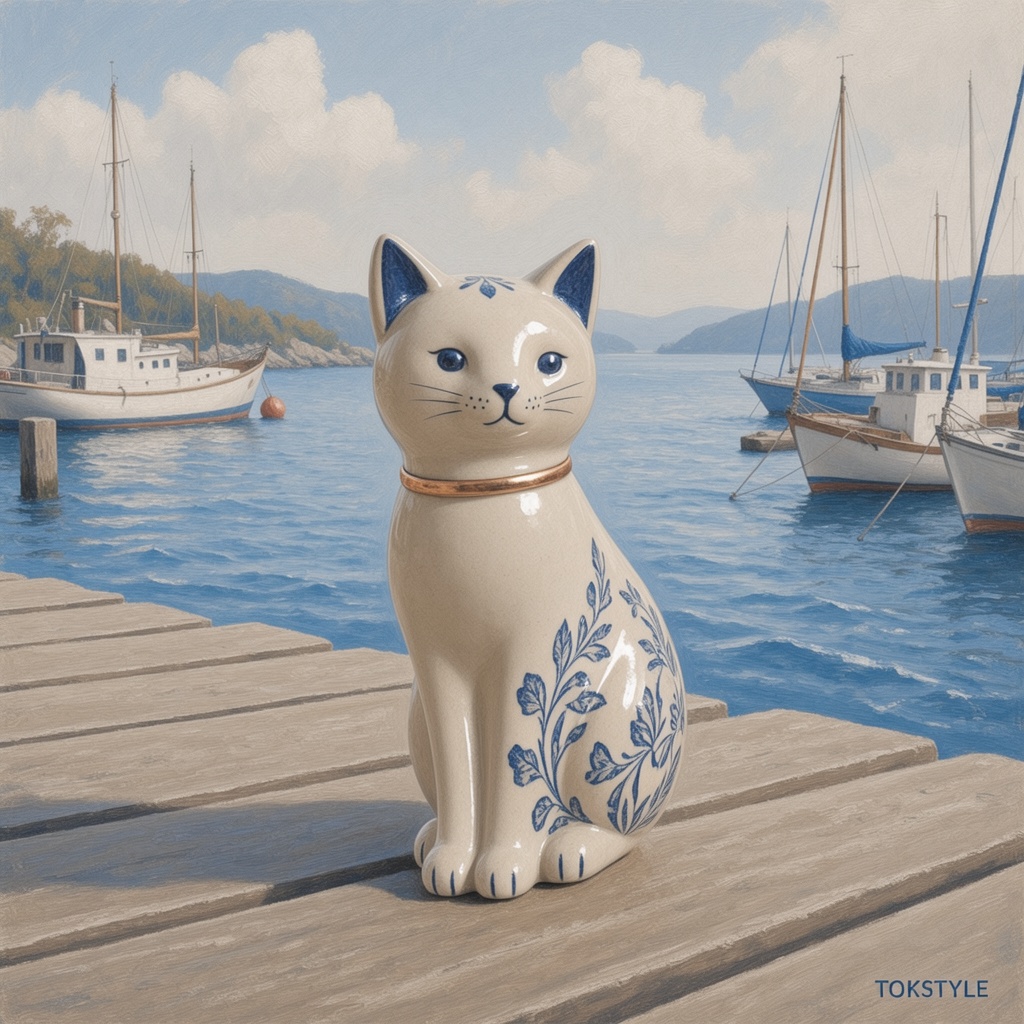
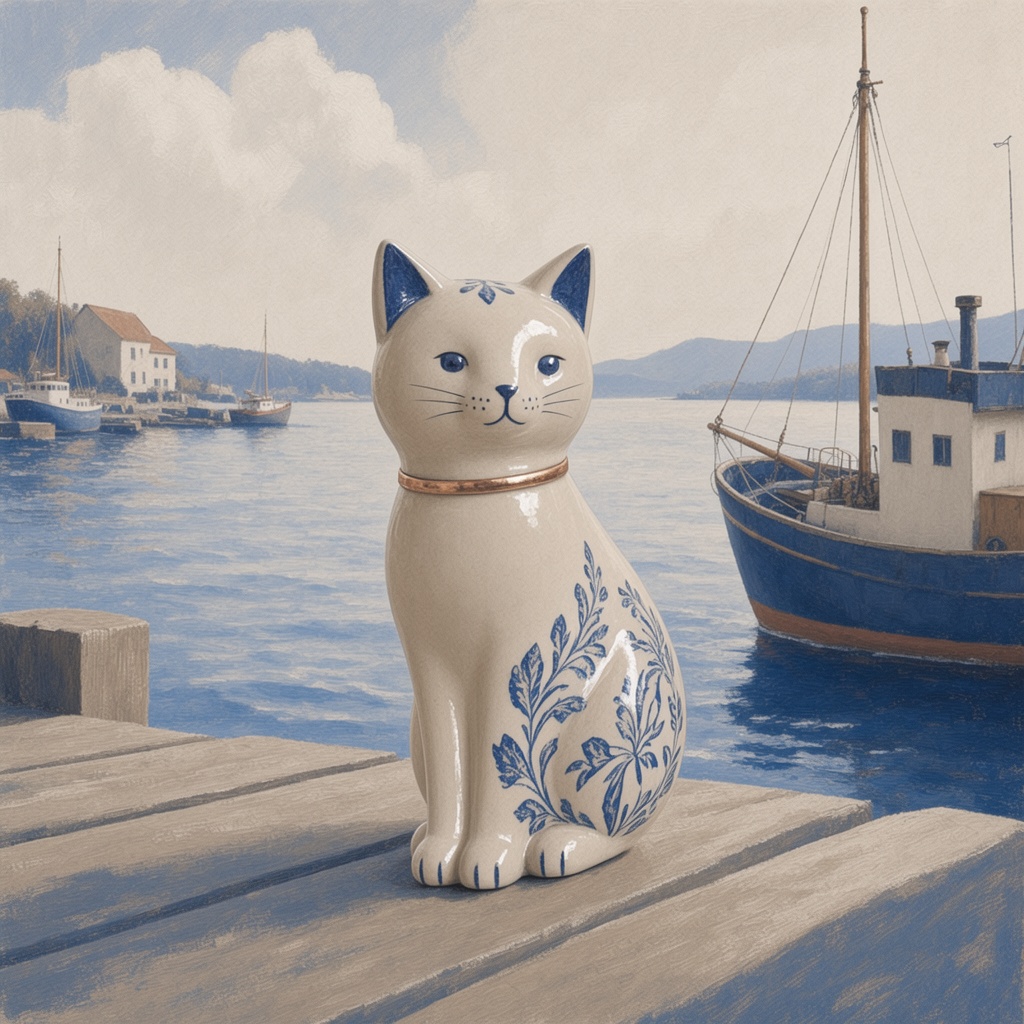
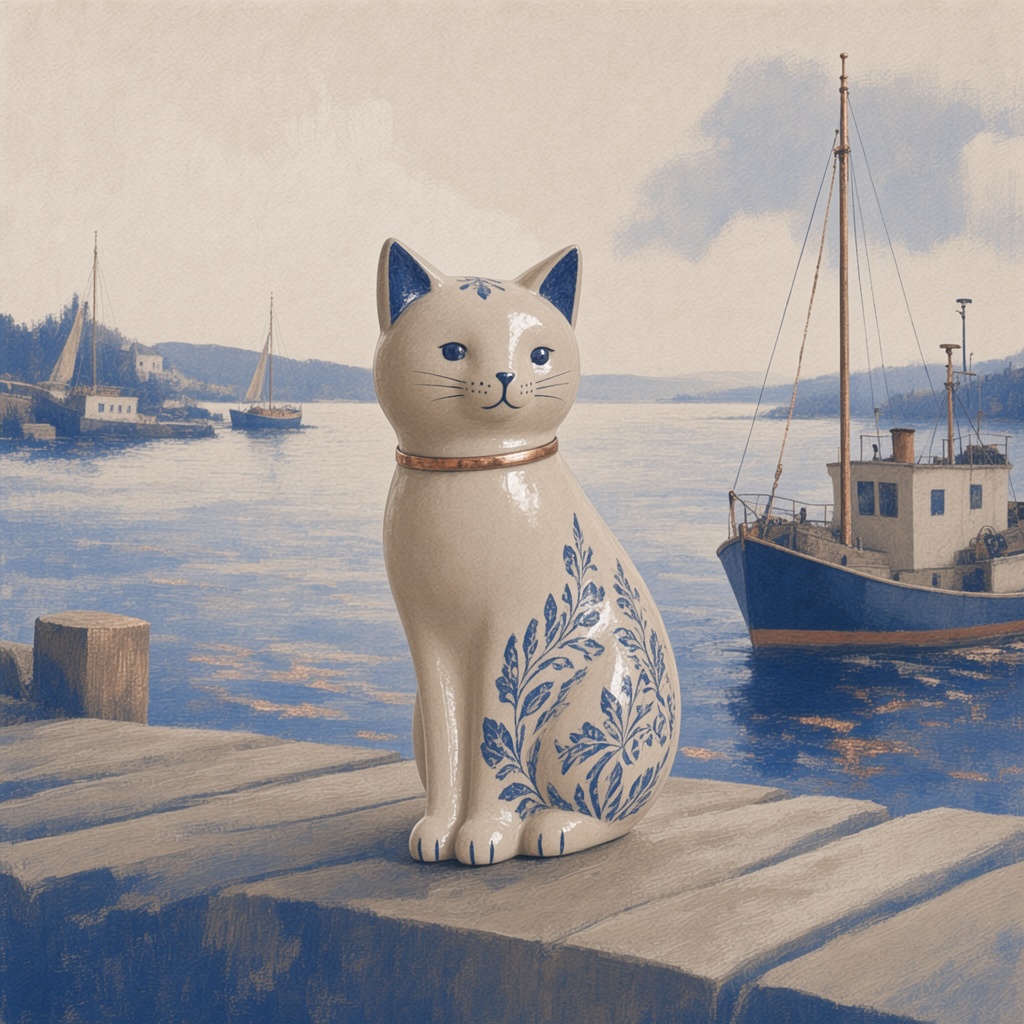 TOK 1 · TOKSTYLE 1
Both bracelets worn on Klein 9B at the same time: TOK ceramic cat figurine on a harbor pier, a TOKSTYLE painting
Watch the balance here. Open the subject scale too far and photographic realism starts riding over the style; overdo the style scale and the cat figurine drowns in the brushwork. The whole thing plays out like a budget negotiation. Start both at 1.0, and when one side takes over, try easing off the dominant one instead of cranking up the weak one.
Ground rules for mixing
- Two LoRAs usually get along beautifully. A third behaves fine as long as each one touches something different (subject + style + lighting, say).
- Two different subject LoRAs in the same frame is the hard case; expect the identities to bleed into each other.
- Keeping the sum of the scales roughly under 2.5 keeps the image healthy.
- Pin the seed while tuning, so we see exactly what our change did and nothing else.